


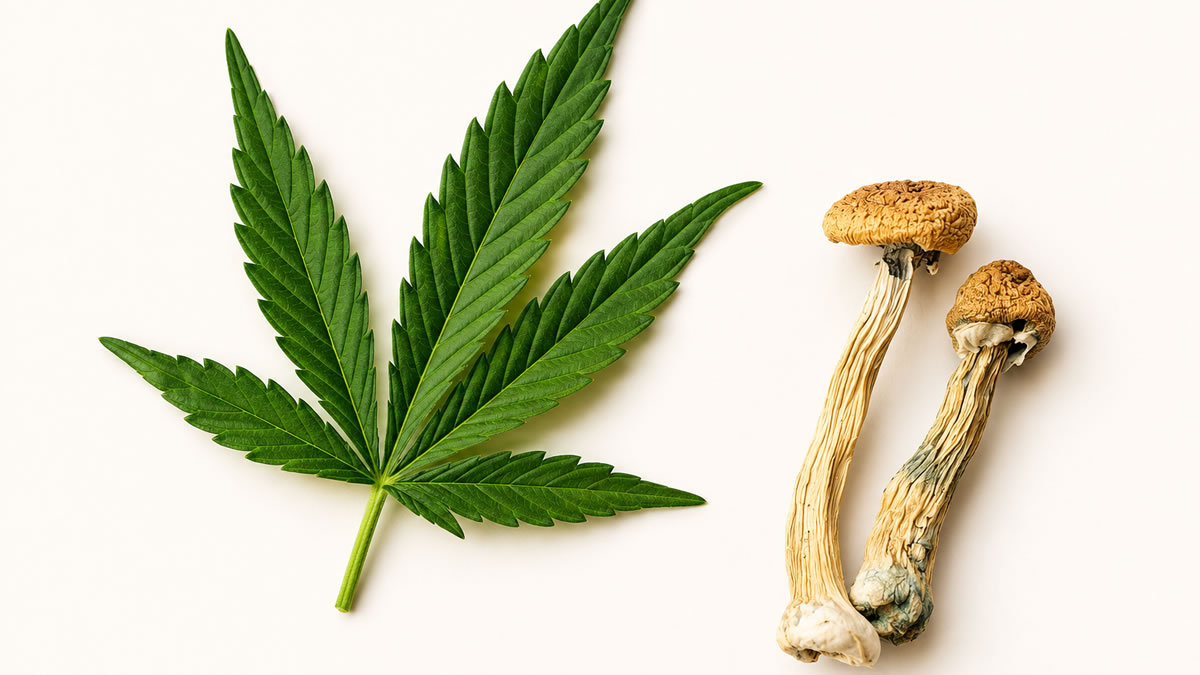
Researchers from the University of California San Diego have confirmed that microdosing psychoactive substances is a widespread phenomenon across the United States. Occurring against a backdrop of shifting drug policies and growing wellness trends, this practice is surprisingly dominated by cannabis, as millions seek alternative ways to manage their daily functioning and mental health.
Microdosing—the practice of taking a fraction of a recreational dose (typically one-fifth to one-twentieth) to achieve subtle effects without strong intoxication—has long been a popular topic in tech and wellness communities. However, scientific data on its prevalence has been scarce.
To bridge this gap, researchers analyzed data from a late 2023 survey of 1,525 U.S. adults conducted via the Ipsos KnowledgePanel. The findings, published in the American Journal of Preventive Medicine, upended previous assumptions that microdosing was strictly a psychedelic trend.
The data revealed that cannabis is by far the most commonly microdosed substance, representing roughly 24 million people nationwide. Current active use also followed this trend, with 3.3% of adults reporting they are actively microdosing cannabis.
| Substance | Lifetime Microdosing Prevalence (% of U.S. Adults) |
|---|---|
| Cannabis | 9.4% |
| Psilocybin Mushrooms | 5.3% |
| LSD | 4.8% |
| MDMA | 2.2% |
Dr. Kevin Yang, a lead researcher from the UC San Diego School of Medicine, noted that the overwhelming popularity of cannabis was one of the study’s biggest surprises. The research also highlighted distinct motivations depending on the substance chosen.
Cannabis microdosing is heavily linked to health and medical management. Users frequently report taking small amounts to alleviate anxiety, depression, chronic pain, and severe stress. Conversely, those microdosing psychedelics like LSD or psilocybin often report recreational motivations, seeking milder psychoactive experiences without intense hallucinations.
The study uncovered a strong correlation between microdosing and mental health struggles. Approximately 21% of individuals who described their mental health as "poor" reported microdosing cannabis. In contrast, only about 8% of those with "excellent" mental health had tried the practice.
However, researchers emphasize that this relationship is complex. The study cannot determine if microdosing directly improves or worsens mental health, or if those suffering from psychological challenges are simply more desperate to find relief through alternative methods.
Geography and policy also play a role. The study noted that psychedelic microdosing is more prevalent in regions where laws surrounding these substances have been relaxed or decriminalized, suggesting that legal access heavily influences reporting and usage.
Despite the massive public enthusiasm fueled by podcasts and social media, scientists urge extreme caution. Most current evidence relies on anecdotal personal stories rather than rigorous, large-scale clinical trials. Existing controlled studies have yielded mixed results, with some showing mood improvements and others finding effects no better than a placebo.
Safety remains a paramount concern. Because many of these substances remain illegal or unregulated, products can easily contain contaminants, incorrect dosages, or entirely different chemicals. With most users failing to chemically test their substances, the risk of unexpected reactions or accidental overdoses is significantly heightened.
Ultimately, the UC San Diego study provides the clearest picture yet of a rapidly shifting cultural landscape. As legalization expands, researchers stress that monitoring these low-dose trends will be critical for public health authorities to provide safe, evidence-based guidance in the future.
