


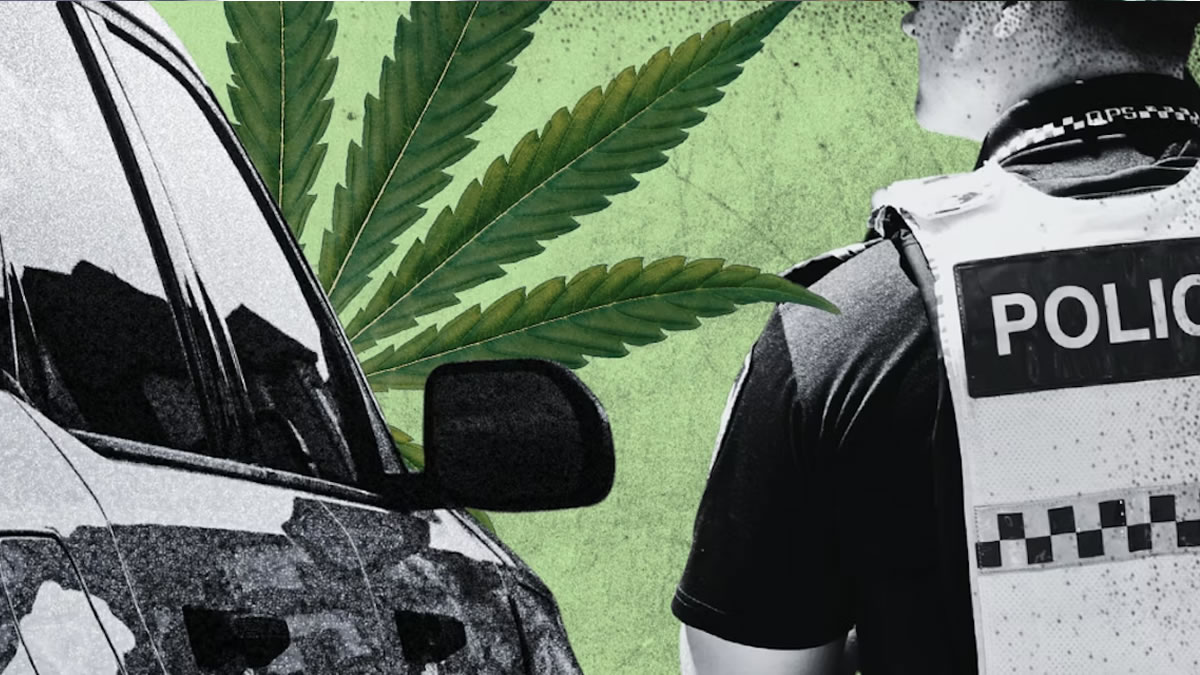
While medicinal cannabis is increasingly prescribed for chronic pain and anxiety, driving with THC in your system remains illegal in almost every Australian state, regardless of impairment. Although CBD-only products do not impair driving, THC significantly impacts cognitive function and motor skills. Patients must navigate strict roadside drug testing laws that cannot distinguish between legally prescribed medication and illicit use.
What is medicinal cannabis?
Medicinal cannabis is cannabis (or its derivatives) that health professionals can legally prescribe in Australia when other medicines have not worked.
The vast majority of medicinal cannabis products in Australia are "unapproved". This means the drug regulator (the Therapeutic Goods Administration or TGA) has not assessed them for safety, quality or effectiveness. Prescriptions for these products have risen sharply in recent years, prompting safety concerns.
Just two medicinal cannabis products are "approved" in Australia, including those for multiple sclerosis or for children with rare, severe forms of epilepsy. The TGA has assessed these for safety, quality or effectiveness.
The Physiological Impact: THC vs. CBD
Medicinal cannabis is now widely prescribed in Australia to manage conditions such as chronic pain, anxiety, and severe sleep disorders. These medications are administered in various forms, including vaporized inhalation and oral oils. The physiological impact on a patient depends entirely on the active compounds—specifically delta-9-tetrahydrocannabinol (THC) and cannabidiol (CBD).
The following table illustrates how different administration methods and compounds affect the body and driving capability.
| Compound / Method | Onset & Duration | Impact on Driving Ability |
|---|---|---|
| THC (Inhaled) | Peaks in 1 hour; lasts 4–6 hours. | Impairs attention, memory, and reaction time (comparable to low BAC). |
| THC (Oral Oil) | Delayed onset; lasts 8–12 hours. | Prolonged impairment; gut metabolization delays peak effects. |
| CBD-Only Products | Varies by administration. | Zero impairment on cognition or driving skills. |
How THC Impairs Driving Performance
THC is the intoxicating component of cannabis. Clinical studies utilizing driving simulators and real-world highway tests confirm that THC negatively impacts critical cognitive functions, including attention, spatial awareness, and memory. The level of impairment is roughly comparable to driving with a low blood alcohol concentration (BAC).
Interestingly, unlike alcohol—which often induces reckless overconfidence—THC can make drivers hyper-cautious. Drivers under the influence of THC frequently attempt to compensate by driving slower or leaving larger gaps between vehicles. However, traffic safety experts warn that these compensatory strategies are insufficient to offset the drug's impairing effects, particularly when sudden, complex driving conditions arise.
It is important to note that medicinal cannabis used specifically for insomnia does not typically cause impairment the following day. Furthermore, regular users show no driving impairment after 48 hours of abstinence. However, because most clinical studies have used healthy volunteers given deliberately intoxicating doses, the exact impairment level of a chronic pain patient utilizing a low, stable, prescribed dose remains a critical gap in current medical research.
The Legal Landscape: A State-by-State Discrepancy
The legal framework surrounding medicinal cannabis and driving in Australia is highly fragmented and heavily penalizes THC patients. In every state and territory—with the sole exception of Tasmania—it is strictly illegal to drive with any detectable amount of THC in your system.
Roadside drug testing relies on saliva swabs designed to detect the mere presence of THC, not the actual level of impairment. Crucially, these tests cannot distinguish between a legally prescribed medicinal dose and illicit recreational use. In Tasmania, patients are legally permitted to drive with THC in their system, provided they are not actively impaired and the medication was prescribed locally.
This creates a glaring legal discrepancy. Patients prescribed other highly impairing medications, such as opioids or benzodiazepines, are legally permitted to drive as long as they are not impaired. The prohibition on THC has sparked parliamentary inquiries, particularly in New South Wales. Recently, Victoria amended its Road Safety Act, granting magistrates the discretion to avoid canceling a driver's license if they test positive for THC but are unimpaired and hold a valid prescription. Nevertheless, the act of driving with THC in Victoria remains a legal offense.
Strategic Advice: How to Drive Safely and Legally
If you rely on your vehicle for work or family responsibilities, navigating a medicinal cannabis prescription requires strategic planning.
First, maintain open communication with your prescribing doctor. If you work in a safety-sensitive environment (e.g., construction or heavy machinery), discuss whether a CBD-only product is a viable alternative for your symptoms, as roadside tests do not screen for CBD, and it is entirely legal to drive while using it.
Second, never rely solely on subjective feelings of sobriety. You may feel completely normal, but your motor skills could still be compromised. More importantly, THC can remain detectable in saliva for hours—and in blood for days—after consumption. If you are involved in a traffic collision and a blood test reveals THC, you face severe legal penalties, including fines, license disqualification, potential jail time, and the immediate voiding of your car insurance.
Expert Verdict: Awaiting Technological and Legislative Reform
The current Australian legal framework forces medicinal cannabis patients to choose between managing their chronic conditions and maintaining their mobility. While researchers are actively developing real-time impairment sensors and conducting long-term studies on chronic pain patients, the law currently lags behind the science. Until roadside testing evolves from "presence-based" to "impairment-based" metrics, patients prescribed THC must operate under the assumption that getting behind the wheel carries significant legal and financial risk.
