


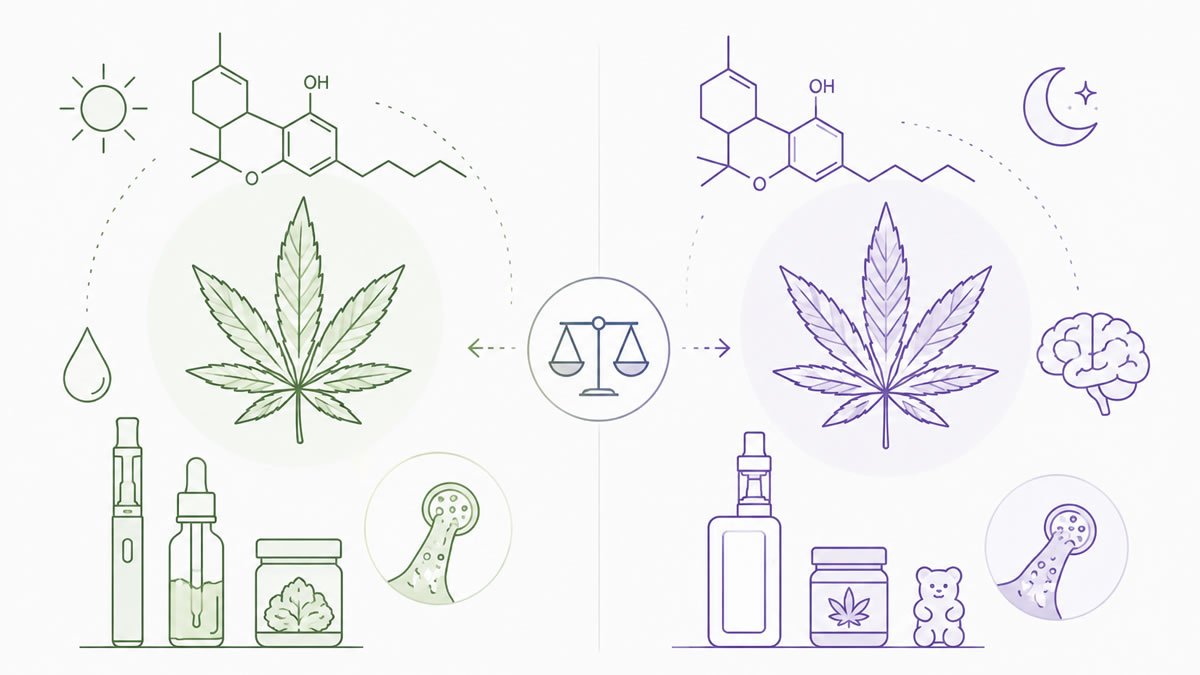
The modern cannabis market has evolved into a complex alphabet soup of cannabinoids. Walk into any local smoke shop, browse an online hemp dispensary, or scroll through cannabis subreddits, and you will find shelves and threads dominated by one specific acronym: THCA.
This compound is currently driving a massive retail boom, marketed under the guise of legal hemp but looking, smelling, and acting suspiciously like the high-grade marijuana sold in licensed dispensaries. The resulting confusion has left consumers, retailers, and regulators wrestling with a fundamental question: what is the actual difference between THCA and traditional THC?
To understand the THCA phenomenon, one must look past the marketing buzzwords and examine the intersection of plant chemistry, federal law, and consumer behavior. Far from being a synthetic creation or an exotic laboratory anomaly, THCA is a fundamental building block of the cannabis plant that is currently reshaping the legal landscape of cannabis access in America.
What Is THCA? Understanding the Raw Precursor
THCA stands for tetrahydrocannabinolic acid. It is a naturally occurring cannabinoid and the direct chemical precursor to delta-9 THC. In a living, growing cannabis plant, very little active delta-9 THC actually exists. Instead, the plant synthesizes THCA in its trichomes—the tiny, resinous glands that coat the flowers and leaves.
In its raw, unheated form, THCA is entirely non-intoxicating. This is because its molecular structure contains an extra carboxyl group (a chain of carbon, hydrogen, and oxygen atoms). This additional chemical ring physically prevents the THCA molecule from binding effectively to the CB1 receptors in the human brain and central nervous system—the specific receptors responsible for producing the euphoric, mind-altering effects associated with cannabis.
For this reason, consuming raw cannabis leaves, juicing fresh hemp, or swallowing unheated THCA isolate will not result in a psychoactive high. Instead, raw THCA interacts with the body's endocannabinoid system in more subtle ways, which researchers are currently studying for potential therapeutic, anti-inflammatory, and neuroprotective properties.
What Is THC? The Activated Cannabinoid
When people refer to "THC," they are almost always talking about delta-9-tetrahydrocannabinol. This is the primary psychoactive compound in the cannabis plant, famous for producing the classic "high" that alters mood, sensory perception, appetite, motor coordination, and time perception.
Unlike THCA, delta-9 THC is an "activated" cannabinoid. Because it lacks the bulky carboxyl group found in THCA, its molecular shape fits perfectly into the body's CB1 receptors. Once bound, it stimulates these receptors, triggering the release of dopamine and altering neurotransmitter signaling in the brain.
Historically, cannabis laws, state regulations, and laboratory testing protocols have focused almost exclusively on delta-9 THC. It has been the benchmark metric used to determine whether a plant is classified as legal hemp or illegal marijuana, and it remains the primary number consumers look for on dispensary labels to judge a product's potency.
The Decarboxylation Equation: How Heat Bridges the Gap
The relationship between THCA and THC is defined by a chemical reaction called decarboxylation. This process occurs when THCA is exposed to heat, light, or prolonged aging, causing the molecule to lose its carboxyl group and release carbon dioxide ($CO_2$).
Decarboxylation is not a slow, theoretical lab process; it happens instantly when heat is applied. Common methods of consumption that trigger this conversion include:
- Smoking: Lighting a joint, pipe, or bong instantly decarboxylates the THCA in the flower as it burns.
- Vaping: Heating cannabis flower or concentrates in a vaporizer to precise temperatures converts THCA into vaporized THC.
- Dabbing: Dropping concentrates onto a hot nail immediately vaporizes and activates the cannabinoids.
- Baking: Heating raw cannabis in an oven before infusing it into butter or oil activates the THC for edible consumption.
Because of decarboxylation, the distinction between THCA and THC disappears the moment a consumer uses a lighter, vape pen, or torch. A product that is legally labeled as "99% pure THCA crystalline" becomes nearly pure, highly intoxicating delta-9 THC once it is vaporized and inhaled.
Deciphering the Lab Report: Total THC vs. Delta-9 THC
When reviewing a laboratory Certificate of Analysis (CoA) for cannabis flower, consumers will often see three distinct metrics: Delta-9 THC, THCA, and Total THC. These numbers tell very different stories, and understanding them is crucial for predicting a product's actual potency.
Because THCA loses molecular weight when it drops its carboxyl group during heating, the conversion is not a 1:1 weight transfer. To calculate the actual potential potency of a product after it is heated, laboratories use a standardized scientific formula:
Total THC = Delta-9 THC + (THCA × 0.877)
The 0.877 multiplier accounts for the fact that THCA loses roughly 12.3% of its molecular weight as carbon dioxide gas during the decarboxylation process. This math is essential for understanding product labels. For example, if a jar of flower contains 20% THCA and 0.2% Delta-9 THC, its Total THC potential is not 20.2%, but rather 17.74% ($20 \times 0.877 + 0.2$).
The table below illustrates how different cannabis products display these values on paper versus how they behave when consumed:
| Product Type | Delta-9 THC (Pre-Heat) | THCA (Pre-Heat) | Functional Effect (Post-Heat) |
|---|---|---|---|
| Raw Cannabis Flower | Very Low (typically < 0.5%) | High (typically 15% - 30%) | Highly Intoxicating (via smoking/vaping) |
| THCA Crystalline/Dabs | Near 0% | Extremely High (90% - 99%) | Extremely Intoxicating (via dabbing) |
| Distillate Vape Cartridge | High (typically 70% - 90%) | Low (decarboxylated during extraction) | Highly Intoxicating (pre-activated) |
| Standard Edibles (Gummies) | High (fully activated) | Near 0% | Highly Intoxicating (absorbed via digestion) |
Is THCA Flower Just "Regular Weed" in Disguise?
From a biological and chemical standpoint, the answer is yes. The cannabis flower sold in state-licensed recreational dispensaries and the "THCA flower" sold in online hemp marketplaces are essentially the same plant. Both rely on natural genetics to produce high concentrations of THCA in their trichomes.
The primary difference lies not in the plant's biology, but in how it is harvested, tested, and legally classified. To be sold as legal hemp under federal law, growers often harvest the plant slightly early or use specific cold-curing techniques to prevent the natural, ambient conversion of THCA into delta-9 THC before testing. This keeps the pre-sale delta-9 THC levels below the legal limit of 0.3%, even though the THCA levels might exceed 20%.
Once a consumer purchases this flower and rolls it into a joint, the heat from the flame instantly converts that 20% THCA into active delta-9 THC. To the end-user, the taste, aroma, appearance, and physical effects of high-quality THCA hemp flower are virtually indistinguishable from traditional dispensary marijuana.
The Legal Gray Area: The 2018 Farm Bill
The explosion of the THCA market is a direct consequence of a legal loophole created by the 2018 Agriculture Improvement Act (commonly known as the 2018 Farm Bill). This legislation federally legalized hemp, defining it as any cannabis plant, derivative, or extract containing no more than 0.3% delta-9 THC on a dry-weight basis.
Crucially, the statutory language of the Farm Bill specified delta-9 THC as the sole metric for determining legality, failing to explicitly account for THCA levels in finished consumer products. Hemp operators quickly realized that as long as a product's delta-9 THC remained under the 0.3% threshold at the time of testing, it could legally contain unlimited amounts of THCA.
This loophole has created a massive parallel cannabis economy, particularly in Southern and Midwestern states that lack adult-use recreational markets. In these regions, consumers can walk into local convenience stores or order high-potency THCA flower online, bypass state-regulated dispensary taxes, and have the products delivered directly to their doorsteps via the U.S. Postal Service.
The Regulatory Cliff: November 2026 and Beyond
This federally tolerated gray market is facing a strict timeline. Federal regulators, law enforcement agencies, and state cannabis boards have argued that marketing high-THCA products as non-intoxicating hemp violates the spirit of the Farm Bill. They point out that because these products are designed to be heated, they function as a direct substitute for regulated marijuana.
To address this, updated federal hemp restrictions are scheduled to take effect in November 2026. These upcoming policy revisions are expected to mandate a strict "total THC" testing standard for all hemp products post-harvest. Under a total THC standard, laboratories must apply the $Total\ THC = \Delta^9\text{-}THC + (THCA \times 0.877)$ formula to determine compliance.
Once these rules are enforced, any flower or concentrate with a potential post-decarboxylation THC level exceeding 0.3% will be classified as a controlled substance. This change will effectively dismantle the national retail market for high-THCA flower, forcing brands to pivot or operate strictly within state-regulated marijuana frameworks.
Consumer Misconceptions: Synthetic vs. Natural
Because the hemp market has previously been flooded with synthetic or chemically altered cannabinoids like Delta-8 THC, Delta-10 THC, and HHC, many consumers mistakenly believe that THCA is also a synthetic or semi-synthetic compound created in a lab through harsh chemical processes.
This is a major misconception. Unlike Delta-8, which is typically manufactured by chemically converting CBD isolate using acids and solvents, THCA is entirely natural. It is the raw form of THC that has existed in cannabis plants for thousands of years. When you buy high-quality THCA flower, you are purchasing natural, agricultural cannabis buds, not a product sprayed with synthetic chemicals.
However, because the unregulated hemp market attracts bad actors, consumers must still exercise caution. Some low-quality brands may take low-grade CBD flower and spray or dust it with pure THCA isolate powder to artificially boost its potency. This makes checking lab reports and buying from transparent, reputable brands essential.
How to Read a THCA Product Label and CoA
To ensure safety, quality, and accurate dosing, consumers should never buy THCA products based solely on the front packaging. Instead, they should scan the product's QR code to access its third-party Certificate of Analysis (CoA). When reviewing a lab report, use the following checklist:
- Verify the Delta-9 THC: Ensure the delta-9 THC content is under 0.3% to confirm its legal status as a hemp-derived product.
- Calculate the Potential Potency: Look for the "Total THC" percentage rather than just the THCA percentage to understand how strong the product will be once heated.
- Check the Batch Number: Match the batch number on the product packaging with the batch number listed on the CoA to ensure the report is authentic.
- Look for Contaminant Testing: Reputable brands pay extra for "full panel" testing, which screens for heavy metals, pesticides, residual solvents, mold, and harmful bacteria.
- Review the Terpene Profile: A detailed terpene analysis helps verify the quality and authenticity of the flower, indicating a natural, well-cured product.
Safety, Quality, and the Importance of Sourcing
Because THCA converts directly into delta-9 THC upon heating, consumers must treat these products with the exact same caution they would apply to traditional dispensary cannabis. Do not drive, operate heavy machinery, or perform safety-sensitive tasks after smoking or vaping THCA products.
The primary safety concern with THCA does not stem from the molecule itself, but from the lack of strict regulatory oversight in the hemp industry. While state-licensed dispensaries must adhere to rigorous seed-to-sale tracking, mandatory pesticide testing, and strict packaging guidelines, the hemp-derived THCA market remains largely self-regulated.
To mitigate these risks, consumers should avoid buying THCA products from unregulated venues like gas stations or untrustworthy online vendors. Stick to established, transparent hemp brands that provide comprehensive, easily accessible third-party lab results for every product batch.
