


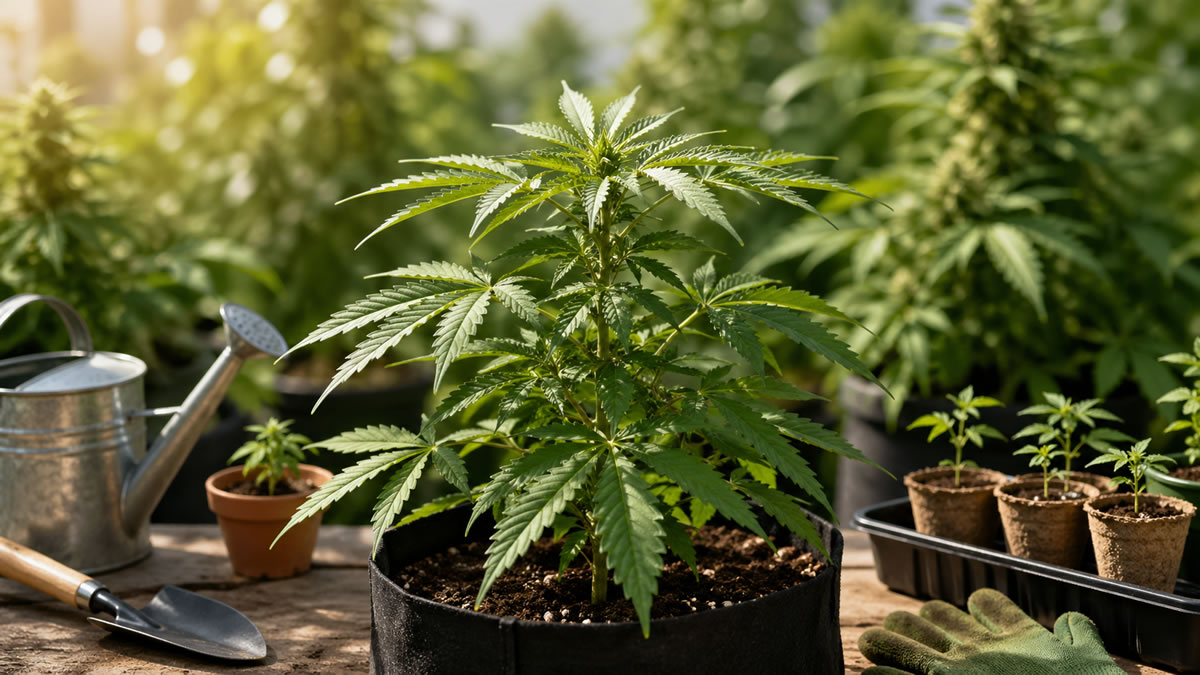
Home cultivation of cannabis has evolved into a highly manageable gardening project, sharing many foundational similarities with growing warm-season crops like tomatoes. This agricultural shift allows enthusiasts to produce high-quality yields in their own backyards or indoor grow tents. However, success is heavily dictated by mastering specific environmental triggers, particularly strict light cycles and seasonal timing, which govern the plant's transition from vegetative growth to flowering.
By understanding the distinct growth stages and genetic variations, growers can optimize their setups and avoid common pitfalls such as nutrient lockout, male pollination, or premature harvesting. Whether cultivating a towering Sativa outdoors or a compact Indica indoors, meticulous attention to detail from planting to the final curing process is essential.
Planning Your Cannabis Garden: Timing and Location
The very first step in your cultivation journey is determining when and where to plant. Your planting timeline is intrinsically linked to your local climate and your chosen growing method.
In most regions, the optimal strategy involves starting seeds indoors during late winter or early spring. If you are growing outdoors, these established seedlings are then transplanted outside only after the threat of the last spring frost has completely passed. This ensures the plants have the entire summer to grow before the late summer or fall harvest.
Choosing Between Indoor and Outdoor Cultivation
Cannabis is a versatile plant that can thrive both indoors and outdoors, but each method offers distinct advantages and challenges.
- Outdoor Growing: This is generally the simpler and more cost-effective method. It relies on the sun and natural seasons, requiring less equipment. However, plants are exposed to weather fluctuations and local pests.
- Indoor Growing: This method requires a higher initial investment in grow lights, ventilation, and climate control systems. In return, it grants the grower absolute control over light cycles, temperature, and humidity, often resulting in highly consistent yields.
Selecting the Perfect Outdoor Spot
If you choose to grow outdoors, site selection is paramount. Cannabis plants are sun-worshippers and require full sun exposure, meaning they need between 6 to 12 hours of direct sunlight every single day.
Furthermore, the location must offer good airflow to prevent moisture buildup, while still being a warm, sheltered spot protected from strong, damaging winds. The soil must be well-draining. If your native soil is heavy clay or nutrient-poor, it is crucial to amend it heavily with compost or organic matter to improve both drainage and nutrient retention before planting.
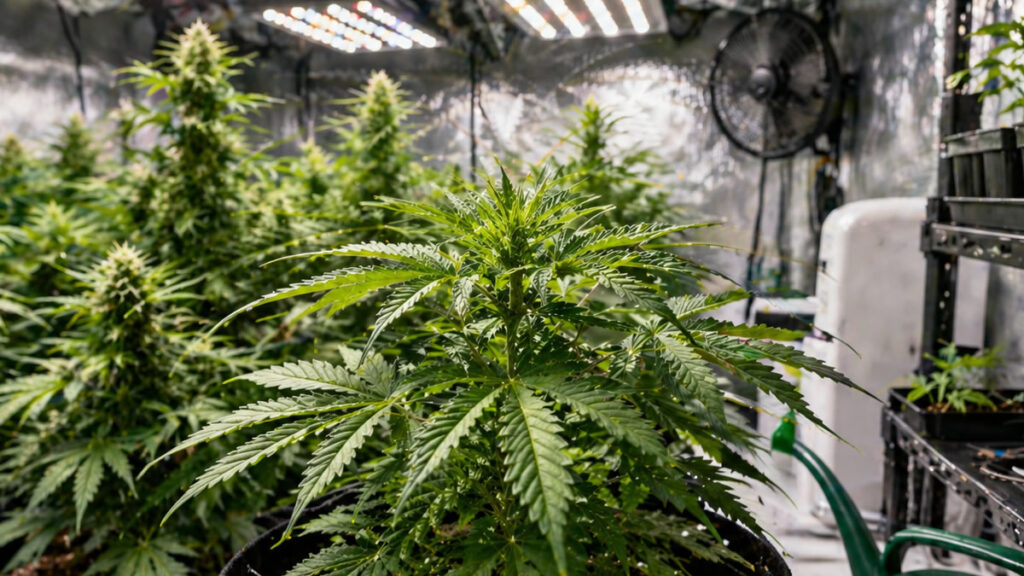
Starting Your Cannabis Seeds
Germination is the awakening of the seed. Cannabis seeds can be started using two primary methods: pre-sprouting them for maximum control, or sowing them directly into the soil.
Option 1: Pre-Sprouting Seeds (Maximum Control)
This method allows you to verify that a seed is viable before taking up space in your pots or garden beds.
- The Water Soak: Drop your seeds into a glass of warm water. Leave them in a dark place until a tiny, white taproot begins to emerge from the shell.
- The Paper Towel Method: Alternatively, place the seeds between sheets of a damp (not soaking wet) paper towel. Place the towel in a plastic bag or between two plates and keep it in a warm, dark location until the seeds sprout.
Option 2: Direct Sowing (Simplest for Outdoors)
For a more natural approach, especially favored by outdoor growers, you can plant the seeds directly into the earth.
- Direct Planting: Simply sow the dry seeds directly into moist, prepared soil in the exact location where they will spend their entire life cycle.
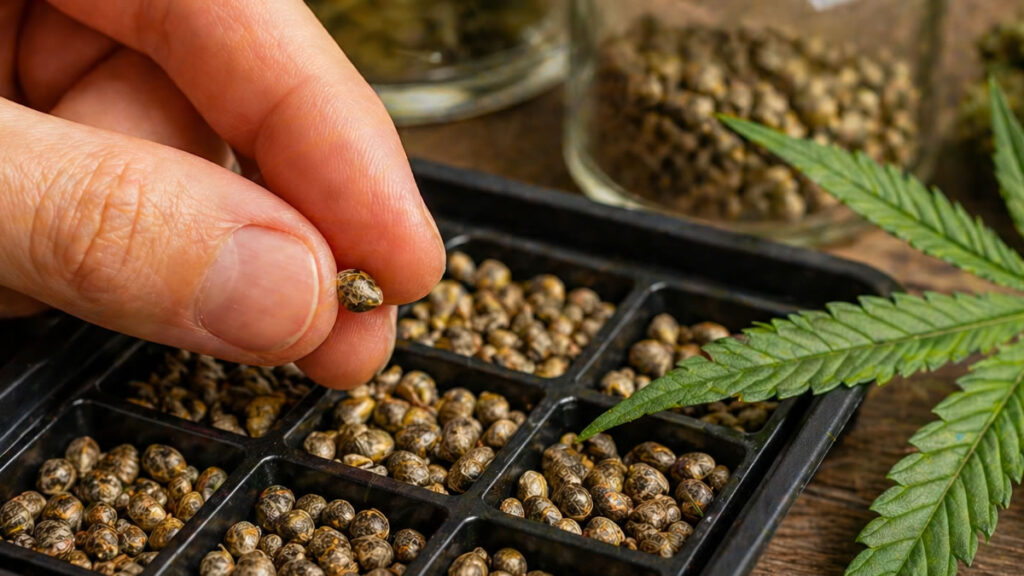
How to Plant the Seeds
Whether you are moving a delicate sprout or planting a dry seed, careful handling is required.
For Outdoor Planting: Wait until after the final frost. Choose your sunny, well-ventilated location. If you are planting a pre-sprouted seed, use tweezers to gently place it into the soil with the delicate white taproot pointing downward. Plant it roughly 1 to 2 cm deep. If using a dry seed, plant at the same depth and ensure the soil remains consistently moist until the seedling breaks the surface.
For Indoor Planting: Select a container with ample drainage holes. Fill it with a light, airy, well-draining potting mix. Plant the seed or sprout 1 to 2 cm deep. Immediately place the container under your grow lights and maintain light soil moisture.
Early Care: Light and Protection for Seedlings
The seedling stage is the most vulnerable part of the cannabis life cycle. Young plants require specific light intensities, temperatures, and physical protection to establish a strong root system.
Indoor Seedling Care
Natural light coming through a window is rarely strong enough for cannabis seedlings. They will stretch and become weak.
- Light: Provide approximately 18 hours of light daily using dedicated grow lights.
- Temperature: Maintain a warm environment, ideally between 70°–85°F (21°–29°C).
- Humidity: Seedlings thrive in higher humidity. Using a plastic humidity dome or a clear cover over the pot can help trap moisture until the plant develops its first set of true leaves.
Outdoor Seedling Care
Outdoor seedlings face the elements immediately and need help transitioning.
- Immediate Protection: Right after planting, protect the vulnerable seedlings using a row cover or a clear plastic tote. This acts as a mini-greenhouse, maintaining necessary warmth and humidity.
- Managing Stress: Seedlings are highly sensitive. If the early spring weather brings cold snaps, heavy wind, or intensely strong sun, temporary covers are essential to prevent fatal stress.
- Establishing the Plant: As the plant grows stronger and establishes a root system, gradually remove the covers to acclimate them to full, direct sun.
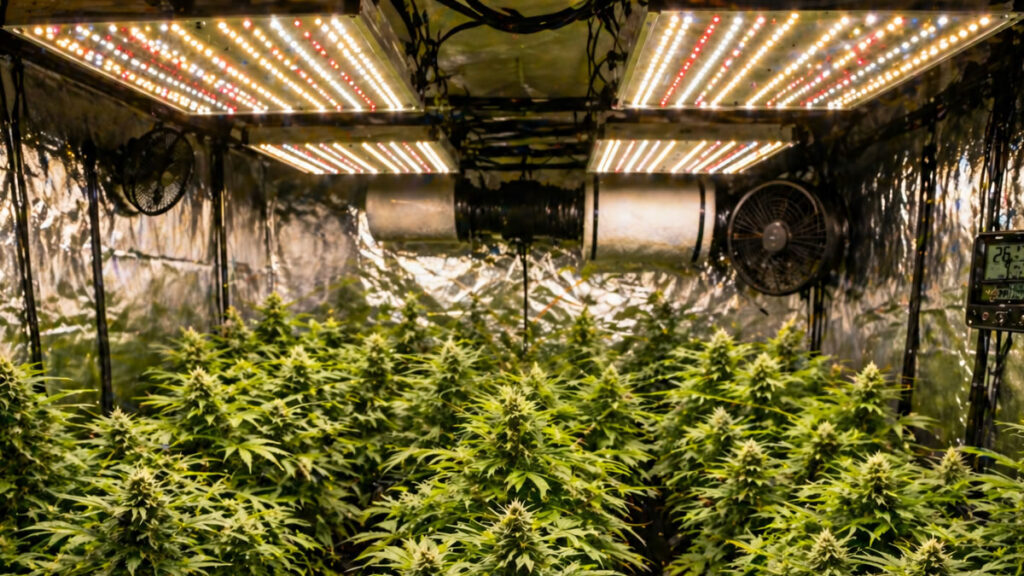
The Vegetative and Flowering Stages
Unlike many common garden vegetables, the life cycle of a cannabis plant is photoperiodic—meaning its growth phases are dictated by the amount of light it receives. Understanding this is the key to a successful harvest.
Step-by-Step Growth Stages
- Establishment: After germination, seedlings focus on root development. They need plenty of light and lightly moist soil. Avoid the common beginner mistake of overwatering at this stage.
- Vegetative Growth: The plant explodes in size, developing thick stems and large fan leaves. It requires strong light, consistent watering, and nitrogen-rich nutrients to fuel this green growth.
- Triggering Flowering: Once the plant has reached the desired size, it must transition to producing buds. Outdoors, this happens naturally as the days grow shorter in late summer. Indoors, the grower must force this change by reducing the light cycle to 12 hours of light and 12 hours of uninterrupted darkness.
- Maturation: During the flowering stage, the plant stops growing vertically and focuses all its energy on producing dense, resinous buds until harvest time.
Mastering Environmental Factors
Watering: The golden rule is to keep the soil evenly moist but never waterlogged. Always allow the top inch of soil to dry out slightly before watering again. This dry-back period allows oxygen to reach the roots and prevents devastating root rot.
Feeding: Cannabis is a notoriously heavy feeder. During the vegetative stage, it requires nutrient-rich soil heavily amended with compost or organic fertilizers to support rapid, steady growth.
Temperature and Airflow: The ideal temperature range is 70°F to 85°F. Good airflow is non-negotiable. Proper ventilation strengthens plant stems and is the primary defense against mold, mildew, and pests, especially in enclosed indoor grow spaces.
The Art of Harvesting
Harvesting is arguably the most critical step in cultivation. Timing is everything; harvesting too early results in weak effects, while harvesting too late can degrade the quality and alter the desired effects.
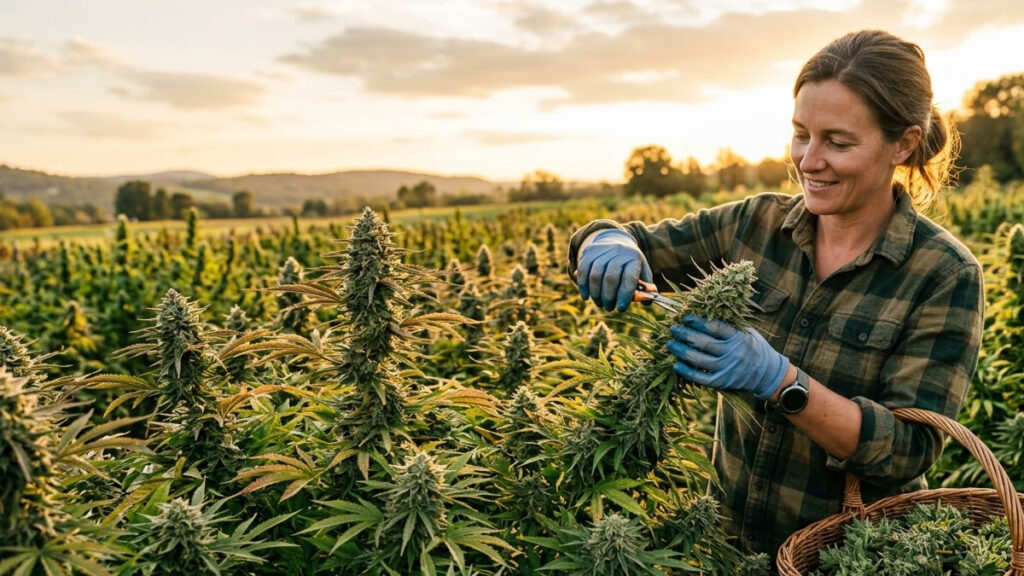
When to Harvest: Reading the Trichomes
Cannabis is typically ready for harvest in late summer or early fall. However, the only accurate way to determine readiness is by closely examining the trichomes—the tiny, mushroom-shaped, crystal-like resin glands covering the buds.
You will need a magnifying glass or a jeweler’s loupe to inspect them properly:
- Clear Trichomes: The plant is not ready. Potency is low.
- Milky White Trichomes: The plant has reached peak THC potency.
- Amber Trichomes: The plant is more mature, and THC is beginning to degrade into CBN, producing a heavier, more sedative effect.
Most experienced growers aim to harvest when the trichomes are predominantly cloudy/milky white, with a small percentage just beginning to turn amber.
How to Execute the Harvest
For smaller plants, most gardeners opt to harvest the entire plant at once. Using clean, sharp gardening shears, cut the main stalk close to the soil level, keeping all the branches and buds attached.
For larger plants, a staged harvest may be necessary. Buds at the top canopy often mature faster than lower buds shaded from the light. In this scenario, cut individual mature branches where they meet the main stem, cutting at a slight angle to facilitate easier hanging.
Immediately after cutting, remove the large, non-resinous fan leaves. Many beginners prefer this "wet trim" method, trimming the smaller leaves around the buds while the plant is still fresh and the structure is easily visible. Always handle the buds gently to preserve the delicate trichomes.
Pro-tip: Wear disposable gardening gloves. Cannabis resin is incredibly sticky. Keep a cloth and isopropyl alcohol nearby to frequently clean your shears so they operate smoothly.
Drying, Curing, and Storage
The work does not end at the harvest. Proper drying and curing are essential for preserving potency, preventing mold, and developing the final flavor profile.
The Drying Process
Hang the harvested plants or branches upside down from a clothesline, hanger, or dedicated drying rack. This orientation allows moisture to slowly and evenly dissipate from the plant tissue.
The drying environment must be a dark area with excellent airflow, such as a closet, shed, or spare room. You can use a small oscillating fan to keep the air moving in the room, but absolutely avoid blowing air directly onto the drying plants, which will dry them out too quickly.
- Ideal Temperature: 60°–70°F (15°–21°C)
- Ideal Humidity: 50–60%
The drying phase typically takes between 5 to 14 days. You will know the plant is adequately dry when the smaller stems snap cleanly when bent, rather than folding or bending silently.
The Curing Process
Once dry, carefully remove the individual buds from the stems. They should detach easily, much like a ripe tomato pulling away from the vine. If the internal fibers still stretch and resist, the plant requires more drying time.
Place the trimmed buds loosely into airtight glass mason jars. It is vital to leave about an inch of empty space at the top of the jar to allow air circulation. Never pack the buds tightly, as restricted airflow drastically increases the risk of mold.
Humidity management inside the jars is crucial. You want to maintain an internal relative humidity of 55–65%. Beginners can easily achieve this by dropping a small, two-way humidity control pack into each jar, or by monitoring the jars with a mini hygrometer.
For the first week of curing, you must open the jars once a day for a few minutes. This practice, known as "burping," releases built-up moisture and replenishes oxygen. After the first week, reduce burping to once every few days for the next 2 to 3 weeks.
Long-Term Storage
Once fully cured, store your finished cannabis in airtight containers in a cool, completely dark place. Light and heat degrade THC. When stored correctly, cannabis can maintain its high quality and potency for a year or longer.
Troubleshooting Pests and Common Problems
Even the most careful gardeners will encounter issues. Early identification and intervention are key to saving your crop.
| Problem Category | Symptoms & Identification | Solutions & Treatments |
|---|---|---|
| Indoor Pests | Presence of Aphids or tiny spider mites webbing on leaves. | Treat the plant thoroughly with a Neem Oil Spray. |
| Outdoor Pests | Large chunks of leaves missing; presence of deer or local wildlife. | Erect physical barriers like garden fences or chicken wire enclosures. |
| Soil pH / Nutrient Lock-out | Plant shows deficiencies despite being fed. Soil pH is outside the ideal range. | Adjust water pH. "Nutrient lock-out" prevents roots from absorbing available food. |
| Nitrogen Deficiency | Yellowing of older, lower leaves during the vegetative stage. | Increase nitrogen feeding. (Note: Yellowing is normal late in flowering). |
| Nitrogen Toxicity | Leaves become glossy, dark green, and the tips curl underneath (the "claw"). | Flush the soil heavily with plain, pH-balanced water to remove excess salts. |
| Nutrient Burn / Deficiencies | Brown, crispy leaves indicating excess nitrogen or a Calcium/Magnesium deficiency. | Flush with plain water, correct the pH, and resume a balanced feeding schedule. |
| Mold / Bud Rot | Brown or grey fuzzy spots developing deep inside the dense flower clusters. | Immediately cut off and destroy affected flowers. Increase airflow and reduce humidity. |
Genetics: Selecting and Sourcing Seeds
The foundation of a great harvest is great genetics. Always source your seeds from reputable breeders. Online communities, social media groups, and cultivation forums are excellent resources for finding reviews on top-quality seed banks.
The Three Species of Cannabis
Cannabis is generally categorized into three main species, commonly referred to as "strains" within the genus: C. sativa, C. indica, and C. ruderalis.
| Species | Characteristics & Growth | Effects & Popular Strains |
|---|---|---|
| C. sativa | Native to equatorial regions. Tall plants (10-20 ft) with narrow leaves. Ideal for outdoors. Long flowering time (10-16 weeks). | Higher THC-to-CBD ratio. Used medicinally for depression, fatigue, and focus. Strains: Sour Diesel, Jack Herer, Durban. |
| C. indica | Originates from the Hindu Kush Mountains. Short, bushy plants (2-6 ft) with broad leaves and dense buds. Fast flowering (7-10 weeks). Ideal indoors. | High in CBD. Offers sedative effects, used for insomnia, pain, and relaxation. Strains: Granddaddy Purple, Northern Lights, Bubba Kush. |
| C. ruderalis | Hardy plants from harsh polar climates (Siberia). Small stature. Autoflowering trait (completes cycle in 8-10 weeks regardless of light). | Low THC, higher CBD. Often crossbred with Sativa/Indica to create autoflowering hybrids. Strains: Lowryder, Auto Northern Lights. |
It is worth noting that most modern cannabis strains are hybrids, carefully bred to balance the growth traits and medicinal effects of these primary species.
Understanding Seed Types
When purchasing seeds, you must choose between three distinct types, each catering to different grower needs.
- Autoflowering Seeds: Highly recommended for beginners. These plants automatically transition to flowering based on age (usually completing their full cycle in 8–10 weeks), regardless of the light schedule. They remain small, making them perfect for limited spaces.
- Regular Seeds: These are the result of natural pollination, producing a roughly 50/50 ratio of male and female plants. While males are vital for breeding and genetic diversity, they do not produce consumable buds.
- Feminized Seeds: Created by stressing a female plant to produce pollen, these seeds guarantee almost 100% female plants. This offers ultimate convenience for growers who only want to cultivate consumable flowers without the risk of male pollination.
Understanding Cannabis Sex and Pollination
Cannabis is a dioecious plant, meaning male and female reproductive organs grow on completely separate plants. Being able to identify the sex of your plants early is a critical skill.
Only female plants produce the resinous buds that growers harvest. Male plants produce pollen sacs. If a male plant is allowed to mature, it will release pollen that can travel for miles, pollinating the female plants. Once pollinated, the female plant stops focusing energy on resin production and instead focuses on producing seeds, drastically lowering the final quality and potency of the harvest.
Unless you are growing exclusively from feminized seeds or verified female clones, you must monitor your plants daily as they transition from the vegetative stage into the flowering stage.
How to Identify Male vs. Female Plants
Both male and female pre-flowers begin as tiny spheres at the plant's nodes (where the branches meet the main stem), located just behind the stipules. As they develop, their differences become obvious:
- Female Flowers: The small sphere develops a narrow tip. From this tip, two distinctive, hair-like white strands called "styles" or "pistils" will emerge.
- Male Flowers: The spheres remain rounder and develop into clusters that look like tiny bunches of bananas. They do not have a narrowed tip, and no white pistils will emerge.
If you spot a male plant, remove it from the grow area immediately and destroy it to ensure a seed-free, high-quality harvest.
Wit and Wisdom for the Home Grower
Cannabis cultivation is a zero-waste endeavor if you utilize the whole plant. Do not throw away your plant trimmings. The stems, large fan leaves, and tiny undeveloped buds can be safely added to your compost pile; they will not psychoactively infuse your vegetable garden.
Alternatively, you can create nutrient-rich compost tea for free garden food. Simply add your compost and plant trimmings to a bucket, cover it with water, and let it steep for a few weeks. Dilute the mixture with fresh water and feed it back to your plants. The remaining organic matter can then go into the compost bin.
Furthermore, the "sugar leaves"—the small, trichome-covered leaves trimmed directly from the buds—should be saved. They contain enough cannabinoids to be used in making your own wellness products, ranging from tinctures and drinking teas to infused canna-oil and cannabutter.
As you embark on your growing journey, consider the historical perspective of this remarkable plant:
The plant is “extraordinarily safe, safer than most medicines prescribed every day.” If it were “a new discovery rather than a well-known substance carrying cultural and political baggage, it would be hailed as a wonder drug.”
– Lester Grinspoon, M.D., Harvard University (1977)
