


A disturbing medical phenomenon known as "scromiting" is on the rise among long-term cannabis users. A brutal combination of "screaming" and "vomiting," this condition is the most extreme symptom of Cannabinoid Hyperemesis Syndrome (CHS). While cannabis is often prescribed to treat nausea, chronic exposure to high-THC products can trigger a paradoxical reaction, causing the body's digestive system to revolt violently. Understanding the warning signs is critical for heavy users to avoid hospitalization.
Key Takeaways
- The Definition: Scromiting is severe, uncontrollable vomiting accompanied by screaming in pain, caused by chronic cannabis use.
- The Paradox: While THC initially suppresses nausea, long-term exposure can disrupt the brain-gut axis, causing the opposite effect.
- The Trigger: It is linked almost exclusively to high-THC products; CBD-only products rarely cause this reaction.
- The Relief Myth: Users often take scalding hot showers to relieve symptoms, a key diagnostic sign of CHS.
- The Cure: The only permanent cure is the complete cessation of cannabis use; symptoms usually improve within days of quitting.
The Medical Reality: What is CHS?
Cross-referencing emergency room data indicates a critical shift in cannabis-related hospitalizations. Cannabinoid Hyperemesis Syndrome (CHS) is a newly recognized condition that turns the medicinal properties of marijuana against the user. For years, patients may consume cannabis without issue, only to suddenly develop debilitating cycles of nausea and abdominal pain. Scromiting represents the acute phase of this syndrome—a state of physical distress so intense that the patient screams while vomiting.
The condition is frequently misdiagnosed because patients often increase their cannabis consumption in a misguided attempt to treat the nausea, creating a vicious cycle that worsens the symptoms.
Why Does It Happen? The THC Overload
A deep dive into the toxicology reveals that THC disrupts the body's natural systems controlling digestion. The endocannabinoid system regulates nausea and vomiting in the brain and gut. In the short term, THC binds to receptors to stop sickness. However, chronic exposure desensitizes these receptors.
Over time, the constant flood of high-potency THC alters the function of the hypothalamus (which regulates body temperature) and the enteric nervous system (the "brain" of the gut). This leads to delayed gastric emptying and a hyperactive emetic response. Essentially, the gut becomes paralyzed while the brain signals an urgent need to purge.
Symptoms and the "Hot Shower" Sign
Identifying scromiting early can prevent severe complications. The symptoms go beyond standard stomach bugs.
| Symptom Category | Description | Warning Sign |
|---|---|---|
| Physical Distress | Uncontrollable retching and screaming. | Lasts hours to days. |
| Behavioral | Compulsive bathing. | Relief only from scalding hot water. |
| Systemic | Dehydration & Electrolyte loss. | Risk of kidney failure. |
| Pain | Severe abdominal cramping. | Often misdiagnosed as appendicitis. |
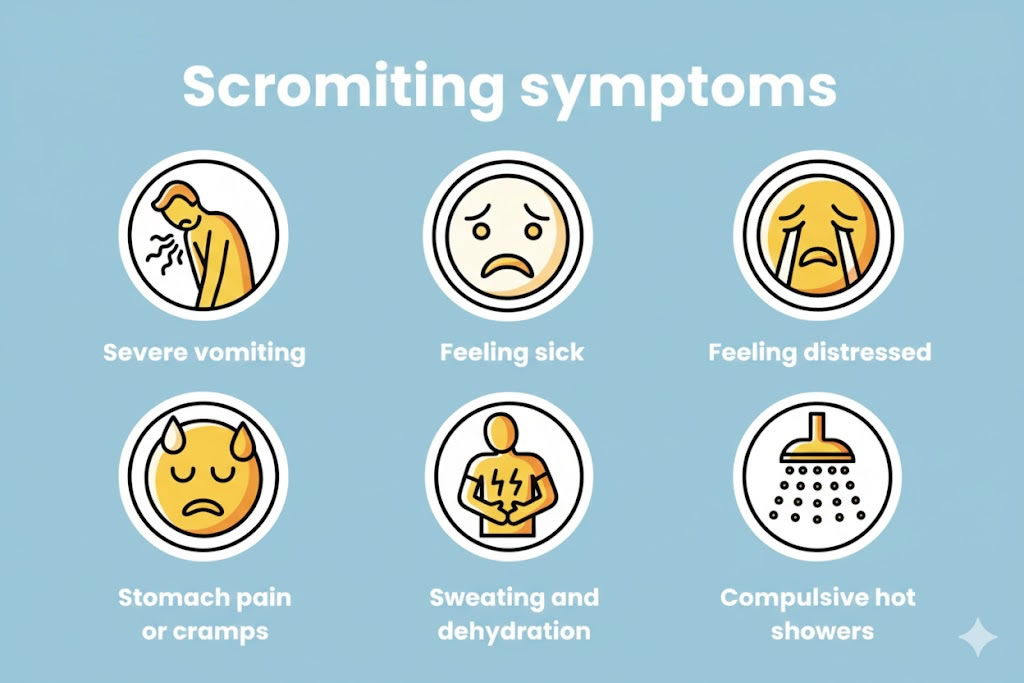
The "hot shower" sign is particularly telling. Patients often report spending hours in scalding water because the heat distracts the nerves in the skin, temporarily overriding the pain signals from the gut to the brain.
Is Scromiting Dangerous?
Yes, scromiting is a medical emergency. The physical act of violent, repeated vomiting places immense strain on the body. The primary risks include:
- Severe Dehydration: Rapid loss of fluids can lead to shock.
- Electrolyte Imbalance: Loss of potassium and sodium can cause heart arrhythmias.
- Esophageal Tears: The force of vomiting can tear the lining of the throat (Mallory-Weiss tear).
- Kidney Failure: Extreme dehydration can shut down renal function.
If you or someone you know is experiencing these symptoms, medical intervention is necessary. Doctors typically administer IV fluids and anti-nausea medication, though standard treatments like Zofran are often ineffective against CHS.
Treatment and Recovery
The path to recovery is straightforward but difficult for dependent users: total abstinence. There is no way to "moderate" CHS. Once a user has developed the syndrome, even small amounts of THC can trigger a full relapse.
Home Management (Mild Cases):
- Hydration with electrolyte solutions (Pedialyte/Gatorade).
- Capsaicin cream (applied to the abdomen) can mimic the relief of hot showers.
- Rest and bland diet (BRAT diet: Bananas, Rice, Applesauce, Toast).
Medical Management (Severe Cases):
- Intravenous fluid replacement.
- Benzodiazepines to calm the nervous system.
- Haloperidol (an antipsychotic) has shown success in stopping the vomiting cycle.
Most patients see a significant improvement within 48 hours of stopping cannabis, though full recovery of the digestive system can take weeks or months.
